

Enough to live well
28 January 2026 | 20-minute listen
Find out what ‘enough’ really means and how practical steps can help your super support you:
- Get your retirement needs in check using simple tools, clear budgeting and a realistic view of your lifestyle
- See how your super and the Age Pension could work together to help cover everyday costs
- Practical ways to stretch your super through income streams, extra contributions and available government support options


Read the transcript
[00:00:00] Introduction
Jonathan: A lot of people think that, you know, it's too late in the game to start. But I'll tell you right now, it's never too late to start making extra contributions to your super.
Andrew: [00:00:14] If the goal for most people is a general level of comfort and not having to stress about the basics, then even that requires a plan. In this episode, we'll look at what enough really means and how to make your money last. So listen to help shift the way you think about your super. From Cbus, I'm Andrew Mackinnon and this is Cbus Super Shift. Bob Byrne, a Sparky for 23 years before becoming a Cbus coordinator ten years ago, is along for the discussion. Bob, great to have you here.
Bob: [00:00:48] No problem at all. Andrew, good to be here.
Andrew: [00:00:51] And joining us is Jonathan Harkness, a Cbus retirement adviser with more than a decade of experience in advice services. Jonathan, thanks so much for being here as well.
Jonathan: [00:01:01] Oh no worries. Looking forward to it.
Andrew: [00:01:03] Now, just before we dive in, I want to remind listeners that the information in this podcast is general in nature and may not account for your specific needs. Please consider your financial position, objectives, and requirements before making financial decisions. Please read the relevant product disclosure statement and target market determination on our website to decide if Cbus is right for you. We'd also like to remind listeners that past performance is not a reliable indicator of future performance. Okay, let's get into it. [00:01:42] Around $53,000 per year. That's the current amount that ASFA, the Australian Super Funds Association, suggests for a person aged 65 to 84 to live a comfortable lifestyle.
[00:01:55] How much do you need to retire?
Jonathan: So there's living, there's getting by and as living well. And there's a huge difference. Many people have an amount of income that they could get by on, but they're not going to be living the best life. They're just paying the bills, paying the food, not really having much fun in life. Personally, I could live on about 40 grand a year, but I don't think that would be comfortable by any means. The Australian Super Funds Association does a really good job of highlighting what they consider to be a comfortable income in retirement, and for a single person, they're saying 52,000, give or take. So I could get by on 40 grand, but, uh, 52 would probably see me living a lot more comfortably.
Bob: [00:02:34] Yeah, I guess it's all about having peace of mind, knowing bills are covered and there's a plan in place so that people feel relaxed, confident and stress free going into it. As we all know, it's getting more and more expensive these days, so retirement ten years ago will look very, very different from retirement now and in the future. People. I guess, just really do want to be comfortable. But some have very different ideas of comfort to others.
Andrew: [00:03:08] How much do I need to retire on? That's the question most asked as people start to plan for retirement. But it's not a one size fits all answer. It actually comes from you and depends on your circumstances, your needs and preferences. Bob, how closely does your experience with members reflect this idea.
Bob: [00:03:27] When they're looking at retirement? They're looking at what their hobbies are now and what they enjoy now going into retirement. It can look very different between what age people retire at, because obviously age plays a factor. And the older they get, the less of these hobbies they do and the less traveling they do. We see this all the time, so it's about listening to people and getting a good understanding of what they actually want to do is the main thing.
Jonathan: [00:03:54] We've all heard you need $1 million in superannuation. Look, um, I'm not saying that anyone shouldn't aim for having $1 million in superannuation.
Andrew: [00:04:03] It'd be nice.
Jonathan: [00:04:04] It would be lovely. Absolutely. Everybody's different, however, and I've met members that can live comfortably on 35 grand a year. They're quite frugal with their money. They have a very modest life and they're not travelling on a regular basis. It's just more about being there for their kids and their grandkids and staying local. But then I've also met members that they want to spend about 110 grand a year for the first five years of their retirement, which is meeting their income needs, but also allowing for a couple of European holidays every year. And it's hard to come up with a lump sum if you don't actually know what those ongoing income needs are. And for example, if you are going to purchase a caravan to go travelling around Australia, or if you are going to complete some home renos or even help the kids out with getting their first home, it could be a whole number of different things. But to attribute everyone needing $1 million in super. I don't think that's the case.
John Doe 3: [00:05:04] When I picture a retirement living well, I think just not having to worry about paying bills. If I can cover my bills and, you know, have grandkids over in the future, or just the family over and put on dinner and lunch for everybody and them not having to bring anything like that for me is living the dream.
John Doe 2: [00:05:23] For me I just want to not have any debts and have enough to to go on a bit of a holiday regularly and sort of do what I want to do.
Nasrullah 23: [00:05:33] When a living well is not having to worry about money. Mate, that would be living well and having a nice little family with you. That's it. That's all you want. Otherwise $1 billion sounds great as well.
[00:05:52] Using retirement calculators
Andrew: Okay, so it's worth sitting down then and having a think about what you'd really like to do come retirement, and then what you can actually afford to do. Where's the simplest place to start with some of these calculations?
Jonathan: [00:06:05] A good place to start might be using a retirement calculator so our members can access these calculators online. They're available on the Cbus public website. You'll be able to break it down into your different categories. For example, your household needs, your food, your day-to-day expenditures, and then what are your lifestyle factors? How often are you going to go out for dinner, entertainment and travel, as well as allowances for unexpected costs that may arise during your retirement? But there are some also fantastic resources out there. For example, the Australian Securities and Investment Commission, they've got a website called Moneysmart. It's a free public offering where anyone can go on there and use their retirement income calculators, their budgeting calculators, and also looking at the Australian Super Funds Association research as to what is considered comfortable versus modest in retirement. It's definitely a very personal thing, and some of these tools, they are quite generic in the sense of they're going to be based on averages in the country, but people do underestimate what these costs are, and that can just be a great place to start.
Bob: [00:07:14] The Cbus online Calculators are fantastic tools. We actually go through them on the daily with members to show them what they can actually foresee. It actually gives apprentices, believe or not, a good idea of how much they can end up with if they do the right thing very early on. I generally tell younger members at the start of their career think of super like a fruit tree, where at the start you might not see a seedling and you feed it, water it. Then when you get it growing and you’re growing, by the end of it, you’ve got a lot of fruit to pick off the tree.
Andrew: [00:07:49] We're talking about solutions that involve a bit of technology know how. But particularly for older Cbus members, navigating technology like online calculators wouldn't come naturally to them.
Bob: [00:08:01] Look, a lot of people come from the sites from an early age. A lot of people have foreign backgrounds. They don't really understand the system. I find, especially with older members who aren't as tech savvy, they panic a lot because they feel they've been left behind. But when they sit down and I'm from a construction background myself, so we'll talk to them in their language, try not to confuse them too much, and just we build up relationships with these people because they come to us all the time. I could see the same person every six weeks because he might have a new question. So you build up relationships with these people and they put an element of trust in with you. But generally what I will do is I'll sit with a retirement calculator online, show it in front of them so they can see it with their own two eyes. And then if they want extra financial advice, I'll put them onto the phone to the financial advisors on the Cbus line, which is part of their membership.
[00:08:55] Where to go for help
Jonathan: Bob, I'm really glad you raised that. A lot of our members feel like they are left behind because they don't know how to use the technology. We don't expect every single member to be able to utilize the technology. You don't need to feel left out. One of the great things about technology is we can now do video appointments can almost mimic that in-person interaction that a lot of our older members highly value. And it's just as simple as having a smartphone.
Andrew: [00:09:21] That's right. And Cbus do offer so much support between the coordinators and the advice team, they'll have no problems helping you out. Like, for example, helping people put a budget together, which is really foundational to understanding what you need in retirement and how to get there.
Jonathan: [00:09:37] It allows you to make an informed choice. If you don't have an idea of what your budget is, you don't have a starting point for planning because you cannot set a retirement goal if you don't know how much income you need to live on. Especially important if you retire before the Age Pension age where you may not be entitled to that government support. And for anyone that is, say, 50 years old, for example, you're ten years away from being able to start touching the super money. It would be a good exercise to just stop and think if I was retired right now, in today's dollars, what do I want to be doing? How much is that going to cost me, and what does that look like on an annual basis? Also, it helps reduce stress, and having a plan means fewer surprises and more confidence in your decisions.
[00:10:28] The Age Pension
Andrew: And if there's one thing we could do with a little less of these days, it's stress. Understanding the benefits of the Age Pension might also put your mind at ease, because if Cbus members are eligible, it can work with your super to help cover everyday costs.
Bob: [00:10:44] Yeah, the design to actually complement each other super provides flexibility. Or the Age Pension itself is it's a safety net. Most people qualify for some sort of Age Pension. Around 95% of our members will receive full or partial support.
Jonathan: [00:11:01] And just to tack on to that, you can balance both with the right strategy. You can draw from your super while maximizing your pension entitlements. And, uh, that's where the value of engaging with your super fund and your financial advisor can really help you balance out those priorities.
Andrew: [00:11:17] Yeah, it's absolutely it can be life changing if someone has a smaller super balance. What's a practical way to make it go further? Jonathan.
[00:11:27] Super income stream accounts
Jonathan: 60% of our older members actually have a balance of less than 150,000 in their super account. And, um, when you think about living for potentially 20, 25 years without generating employment income anymore, one might look at 150,000 and sort of go, that's not a lot of money. I'd be fairly confident to say that if you're a member who's got that much in superannuation that you're probably going to be entitled to a full Age Pension. Now, don't quote me on that exactly. But that 150,000 that you have in super, you can convert to an income stream. It's invested as well so that that money still grows. And one of the advantages that an income stream has over a super account is that the investment earnings are completely tax free. So, you know, one could choose to not access their super and leave it in the accumulation phase and just dip into it if and when they need to. But they're going to continue to pay tax on the earnings. Whereas one could move that money to an income stream that whilst it will provide a minimum income, it will provide tax free investment earnings as well.
Andrew: [00:12:32] Tax free on earnings is such an attractive incentive. Of course there are eligibility requirements around that. So please go to our website for more detailed information around setting up a SIS or superannuation income stream. But Jonathan, there are some other ways people can make their super investments go further through accessing government support and co-contributions. What do those offer for Pre-retirees in particular?
[00:12:57] Adding extra to your super
Jonathan: Two things come to mind. So concessional contributions. And when I say concessional contributions I mean pre-tax contributions. We're talking your super guarantee which is increased to 12% as of this financial year. And one could choose to salary sacrifice to their superannuation. Now we all have a contribution cap of $30,000 per financial year. However, a piece of legislation that the government introduced around about 7 or 8 years ago allows those with a balance of less than half $1 million at the end of the previous financial year to actually utilise their unused concessional contribution space from the last five financial years. So, to give you an example, if I'm making 100 grand a year, my super guarantee is 12%. So that's $12,000, which means out of the 30 K concessional contribution cap, I've still got $18,000 that I could utilise. What if that had been the same case for the last five financial years? That's an extra 10 or 15 grand contribution cap each financial year that's being rolled over, and one might not be able to afford to put money into superannuation at that stage of life between the age of 60 to 65, however, transition to retirement, which is the second thing that comes to mind, can allow a member to access up to 10% of their super each financial year as a tax free income.
Jonathan: [00:14:21] So that could be a way to allow a member to increase their concessional contributions, to take advantage of those tax benefits that are offered on salary sacrifice, while still maintaining their net income in the lead up to retirement. Certainly, thinking about making extra contributions to super in the lead up to retirement. A lot of people think that, you know, it's too late in the game to start, but I'll tell you right now, it's never too late to start making extra contributions to your super. And in fact, age 60 onwards is where that strategy can really open up a lot and making salary sacrifice contributions. The government introduced Downsizer contribution regulations about 7 or 8 years ago. Lower income earners can also take advantage of the government's co-contribution, where the government is going to put $500 into your super if you put in 1,000, depending on your financial situation. So these are all things that can really just help give you a little leg up late in the game, just to boost your super a bit more in the lead up to retirement.
Andrew: [00:15:26] Again, fantastic opportunities to grow your super. The five-year rollover on concessional contribution cap is a real winner, and a transition to retirement income stream, or TTR, gives you extra flexibility in the later years of your working life. What that means is you transfer or roll-over some or all of your super into a super income stream account and receive regular payments without having to retire, giving you a lot more flexibility. Jonathan also touched briefly on the Downsizer contribution scheme and government co-contributions. There are other episodes of the Cbus Super Shift podcast that cover these topics in more detail. For example, downsizing and your Age Pension or balancing your super and Age Pension. So definitely give those a listen as well. [00:16:23] Now let's turn to debt, because debt can be incredibly challenging, especially for people with a lot of it. But support is there to help guide members who need it. Bob, what experiences do members share with you around debt?
[00:16:36] What about debt?
Bob: Yeah, a lot of our members on the ground, obviously construction workers, they have worked very long, very hard for many, many years, so the feeling of paying off their mortgage is a big one for them. The ups and downs of it's like a roller coaster. You never know what they're going to be paying, so they just kind of want to get it and done. On the back of their mind, it's their house is paid off, and it's a good relief that they know they're not going to foreclose on mortgages and stuff like that. If they do have to retire early, some of our members have to retire early, not by choice. A lot of manual labour goes into it a lot of years. So they their bodies are broken and they just want to get the biggest expense they've got every month to zero, basically.
Jonathan: [00:17:20] As Bob said, it's a peace of mind thing. If you're paying 20 grand a year in mortgage repayments and you carry that mortgage through retirement, you still need to pay the mortgage off. So that creates for a higher income need. And I think that that can create some anxiety for members going into retirement. You certainly have the ability, depending on what your financial situation is, to access super to pay down a potentially remaining mortgage, and that could give you some peace of mind going into retirement. So a lot of people are carrying a mortgage through to retirement, and it's certainly something that needs to be factored in as part of your overall retirement plan.
[00:18:00] Other things to think about
Andrew: It can be really difficult to carry that thought with you, which is even more reason to start planning for retirement sooner rather than later, and get some guidance around reducing your debt and growing your super. As we wrap up, what are some of the things people tend to overlook that can be of real benefit to them?
Jonathan: [00:18:18] People not realizing that they may be entitled to some level of government support even prior to Age Pension age, and picking up on what Bob was saying there. We do have quite a few members that retire around the age of 60, because the nature of construction and building it takes its toll on your body. You can't do it forever.
Bob: [00:18:37] I think a big one for me is not asking the question on planning what they're going to do and not asking for help or reaching out because it's all a bit too overwhelming and leaving it a little too late. We've got a lot of members who they retire and they leave the money in the accumulation phase, and they just have not got the resources or the know-how of how to reap the benefits of getting into an income stream or why it's beneficial. We talk to our delegates quite a lot. We talk to organisers during toolbox talks. We tell members on site visits, come see us. You may have an app on your phone, but come see us. There might be more information there we can help provide you with. It's not just about seeing a balance on your screen, it's about getting the information to set you up for when you come to the day when you need to retire, and having that plan of what you're going to do.
[00:19:33] Where to look next
Andrew: Look, that's exactly right. If you're feeling overwhelmed or that you don't have the answers, that's absolutely fine. It's far better to have more money in your pocket at retirement than worry about raising questions or concerns. So what steps can you take right now? Well, I've got to say the Cbus Retirement Seminars and webinars are just brilliant. They're hosted by Jeff Wallens, Cbus’ senior education specialist. It's an informative, solid starting point, and they're included in your membership. To attend, just head to the Cbus website and search for education sessions to find the one that suits you. Of course, there's the website Cbussuper.com.au for all the super and retirement information we've covered here. You can also reach out to the on-site coordinators like Bob, or walk into the Cbus front counters located in each state, or call the Cbus Advice Team, where you'll find stellar support from people like Jonathan. And all of this contact information can be found in the show notes of this episode.
Bob: [00:20:32] Especially with the seminars that we provide. It's an in-person group setting, and the best thing about it is everybody can ask a question, and even people that are in the background and they're not as confident or as vocal, get to pick up on these stories. And Jeff Wallens, he's so good at laying it out for these people, giving them the advice they need, and basically giving everybody a picture of how to best go about things without obviously going into financial advice. But it's really good for our members that they can see everybody is different out there and everybody has a different situation. But the in-person group setting is a really good tool that I believe everybody coming up to retirement age should attend.
Jonathan: [00:21:18] As a financial advisor with Cbus, I conduct many appointments with members in person, video, over the phone. I can tell you the members that have attended a retirement seminar come to my meetings much more well equipped with their future goals, the picture of what their lifestyle is going to look in retirement and the advice process is then much smoother. I really agree with you on that, Bob. The retirement seminar is such a good place to start.
Andrew: [00:21:49] Jonathan, thanks for breaking down some of this information. It can be so tricky to get your head around.
Jonathan: [00:21:55] Oh no worries at all. If more members give us a call and engage with us as a result of this conversation, then my goal has been achieved. So thank you for having me.
Andrew: [00:22:04] And Bob. Thanks also for sharing your perspective. It's important to understand what members know and how we can help.
Bob: [00:22:11] That's no problem, Andrew. It's always good to get the information out to the members, and I hope they will get something valuable out of it.
Andrew: [00:22:21] You've been listening to the Cbus Super Shift podcast. Listen to more episodes at cbussuper.com.au/podcast, or follow Apple Podcasts, Spotify, or wherever you listen to podcasts.
What you'll take from this episode
- Work out what ‘enough’ means for you: A clear picture of your future helps guide the income you may need
- Know where you stand: Check your balance, contributions and insurance so you’re planning from real numbers
- Look ahead to life after work: See how your super can support what comes next
- Keep steady habits: Regular contributions and checking in on your super can make a real difference over time
- Use the help that’s there: Things like salary sacrifice and government contributions can support long-term growth
Related resources
Explore tools and resources that help you grow your super and plan for what’s ahead.
Meet your host and guests
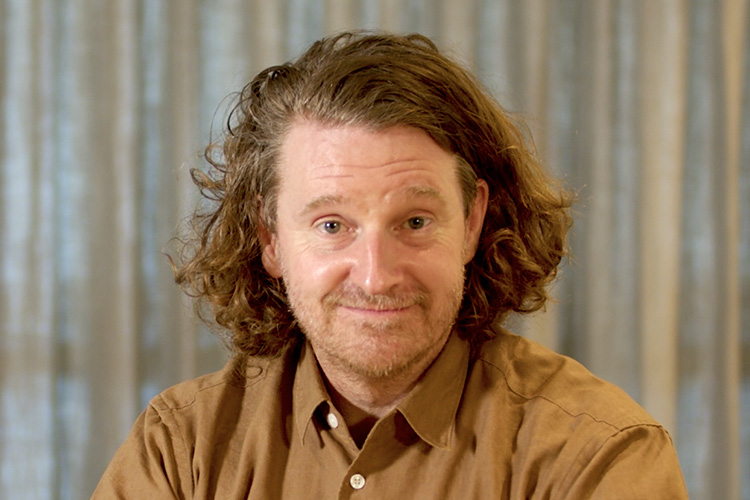
Andrew Mackinnon
Host
Andrew tells stories that uncover what drives people, how they plan, make decisions and shape life after work.
His background in journalism and communications brings complex topics like super and retirement to life in clear, relatable ways.
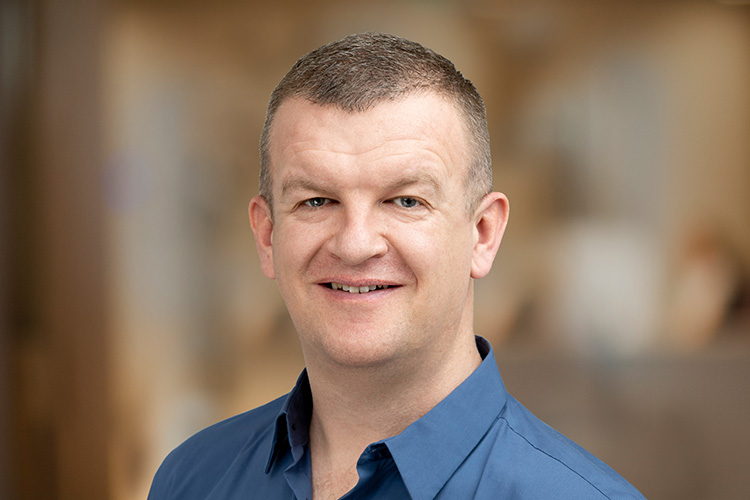
Bob Byrne
Cbus Coordinator, NSW
Bob Byrne spent over two decades as a sparkie before becoming a Cbus Coordinator 10 years ago.
Working across New South Wales, he helps members understand their super with clear, practical support.
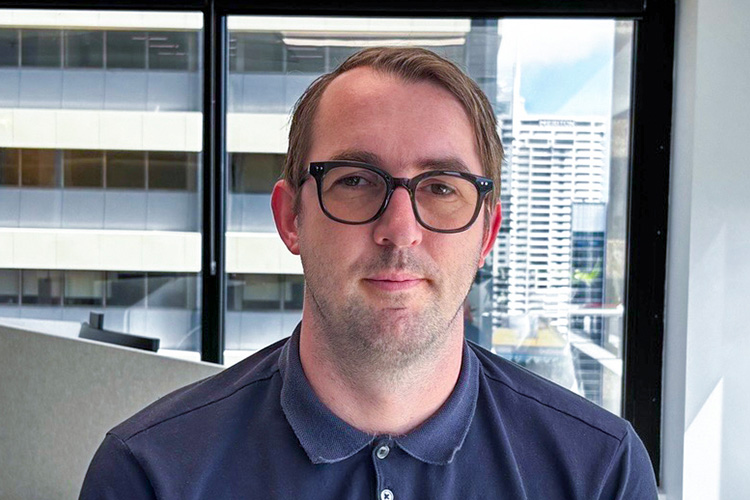
Jonathan Harkness
Cbus Retirement Adviser
Jonathan Harkness is a Retirement Adviser with more than a decade of experience in advice services.
He helps members increase their financial literacy and plan for the lifestyle they want in retirement.