

Balancing your super and Age Pension
10 December 2025 | 17-minute listen
Balancing your super with the Age Pension can feel confusing, but it doesn’t have to be. This episode helps by:
- Exploring simple strategies that could help stretch your retirement income further
- Making smarter choices and knowing what support you might be entitled to
- Tailored tips for whether you’re working part-time or fully retired


Read the transcript
[00:00:00] Introduction
Jes: I've been doing this for over a decade and I've spoken to many retirees. The information is overwhelming, but it's about understanding that it's a journey and it's not a destination.
Andrew: Will your superannuation alone be enough to see you through retirement? It's a phase of life that could last 20 or 30 years. And what if that single source of funds you're relying on falls short? In this episode, we're looking at two key pillars of support that can diversify your income source and help you achieve a quality retirement. In particular, we'll cover superannuation and a range of government supports that you may very well be entitled to. So keep listening to shift the way you think about your super. From Cbus, I'm Andrew McKinnon and this is the Cbus Super Shift podcast. Joining me to build out the three pillar commentary team for this episode is Phil Milne, previously a rig operator and Scaffolder. Phil's been a Cbus coordinator for 12 years.
Phil: Thank you for having me.
Andrew: And the final pillar for this chat is Jesca Nyakuromba, Cbus Retirement advice consultant team leader.
Jes: It's good to be here, Andrew. Thanks for having me too.
Andrew: Now, just before we dive in, I want to remind listeners that the information in this podcast is [00:01:30] general in nature and may not account for your specific needs. Please consider your financial position, objectives, and requirements before making financial decisions. Please read the relevant product disclosure statement and target market determination on our website to decide [00:01:45] if Cbus is right for you. We'd also like to remind listeners that past performance is not a reliable indicator of future performance. Okay, let's get to it.
[00:02:00] The Age Pension
Okay. We're going to start by looking at the Age Pension. A government pillar of support. That way too many people believe they're ineligible for and bypass entirely. You have nothing to lose, so just apply. Even qualifying for a part pension is a win.
Jes: For most Australians. We've got Centrelink and we've got superannuation being the two main providers for income because for most people they don't even think that they would qualify for Centrelink and although they may not qualify for the full pension, they could qualify for part pension. So, it is worthwhile maybe checking around the eligibility in that space and maximising some of the entitlements that are offered through Centrelink. Some of the things that come to mind would be around while they're renting are they getting rental assistance? Or it could be that they can add on that income by working part time, because most people are not aware that they can still work and earn up to $300 a fortnight without affecting their Centrelink. And this is through the work bonus that Centrelink allows for most retirees.
Andrew: Phil, the members you speak to, do they tend to put the pension in the too hard basket?
[00:03:22] Other government entitlements
Phil: Yeah, with a lot of our members, it can be an arduous task applying for the pension because a lot of paperwork, there's a lot of things you need to do. And I think sometimes that can put people off from going down the path of applying for the pension. There's a lot of concessions that you kind of get when you get to the retirement age. You've got the Age Pension, you've got the Commonwealth Seniors health card and there's another thing which is rent assistance, which some people aren't aware that they could get when they get to pension age. And a lot of people aren't aware, Andrew, that they can apply for the pension 13 weeks before they get to 67. So a lot of people will wait until the 67 and obviously a pension doesn't always get fixed up in the first week of complying. It's a good thing to be mindful of, to get in there 13 weeks before and get all your paperwork done. However, it is, and then try and get through it. But the healthcare card, the pension card, they're all big benefits of hitting pension age.
[00:04:11] Age Pension payments aren’t backdated
Andrew: Something to keep in mind is that if you applied late for the Age Pension and 1 in 3 Age Pensioners do, in some cases more than 12 months after becoming eligible, there's no back pay from Centrelink. So for a full Age Pension couple, you could be missing out on up to $45,000. Cbus actually has an online Age Pension calculator you can use any time for an estimate on how much Age Pension you could get and when you could submit your application. Jess as well as the Age Pension, there's also support through government co-contributions, for example. Tell us a bit about it.
[00:04:46] Government co-contributions
Jes: It would make sense for people that are nearing retirement and they've slowed down with work. So maybe not earning as much because you need to be earning less than, say, $62,000 a year, roughly. If you put in a dollar, the government will match that dollar with $0.50. And the limit is $1,000 you can put in. The government will put in 500. The government co-contribution doesn't count towards any of your contribution caps. So for the people that maybe are fortunate enough to contribute as much as they're allowed to, it doesn't go over those annual limits.
[00:05:25] Downsizer contributions
Andrew: Hmm. This is a great bit of help. The Downsizer contribution is another government initiative. Jess, what is it and who's eligible for it?
Jes: So you have to be above the age of 55. And so your primary residence that you would have owned for at least ten years, and you should have lived in that property for some time during that tenure after settlement, within 90 days, you can contribute up to $300,000 into your superannuation. And if you have a spouse or a partner, they can also add $300,000. So that's another $300,000 making it $600,000. And the good thing about that. There's no upper age limit. So when you're 90, when you're 80, it allows you to add more money into superannuation.
Phil: When it comes to downsize, it's important to seek professional advice because at the moment, under the legislation that's around super, your home is exempt from the deeming test and income test when it comes to applying for a pension. Once you do sell your home and put funds into superannuation, then that can come under the income deeming test for the pension. So it may affect your Age Pension payments.
Andrew: Well that's right. Please do check the eligibility requirements and speak to a financial adviser before doing anything like selling your property. There's also more episodes of the Cbus Super Shift podcast that go into a bit more detail around the Downsizer contribution, so take a listen to those as well. So the Age Pension, the Downsizer contribution and spouse contribution are just some of the government supports you may be eligible for come retirement. The second pillar of support we're covering is superannuation, and the excellent programs available that can help streamline access to your funds and boost your super balance. But first, let's allay some fears for people who may feel they've left it too late to add to their super. Jess, is this the case?
[00:07:20] It's never too late to add to your super
Jes: No, it's never too late. We have legislation that allows most people contributing into super up to the age of 75, and that doesn't matter whether you're working or you're retired. So you can still be adding into your superannuation to the ripe age of 75. While people are working and maybe are close to retirement age, or leading up to retirement age when they have paid out most of their home loans in debt. That would be actually a perfect time for most people to be putting more money into super things that they would not have afforded if they were paying off home loans or looking after young kids. So it's never too late. Although there are those many ways you can make contributions, it is important to note that there are some caps in place that you need to be mindful of, and you also need to check your eligibility prior to making any of those contributions.
[00:08:10] Be aware of contribution caps
Andrew: Absolutely. So while you're able to contribute to your super up to age 75 before you do anything, and I know I sound like a broken record, but it's important, please check your eligibility and contribution caps and speak to a financial advisor because there may be penalties or tax implications.
Now, outside of salary sacrifice, you may not be as familiar with some of these programs to help grow your super balance, but that's okay. That's what this podcast is for because you're not alone. Are you aware of how you might be able to boost your superannuation payments?
Jackie 26: I'm not too sure. I know you can, like, voluntarily add more money, but other than that, I don't really have a clue what else I could be doing with my super. [00:09:15]
Wally 59: Salary sacrifice making it work harder. I rely on Cbus to do that. Um, but I did salary sacrifice for 3 or 4 years.
Layla 24: I only know one way. The salary sacrifice? Um, yeah. I'm not too familiar with it at the moment. [00:09:30] Um, it's probably something I'll look into a few more years down the track, although it's probably not a bad idea to start doing it right now.
[00:09:45] Boost super with spouse contributions
Andrew: So let's continue exploring more of the opportunities that can boost your Super Jess the spouse contribution. It's an after-tax contribution. Can you explain a bit more about it and how it works?
Jes: Spousal contribution. That is another great way you can potentially add on to your spouse's superannuation. And if you have a spouse or a partner who has, um, low income, that would be an opportunity to contribute up to, say, $3,000 into your spouse's account, and you would get a tax offset by doing that.
Phil: Just to jump in on that, Andrew, the other thing is if because quite often some of our members, they are paying quite a heavy tax. They've done a lot of overtime, and it is a good opportunity to get that little bit back in your tax return up to $540. As Jess said, if you meet the thresholds to which you've got to contribute to and if you need the threshold, you can find that on Cbus’ website. All the information's there, but it does give you the opportunity to get a little bit back in your tax.
[00:10:46] Super income stream accounts
Andrew: And look, why not make your overtime dollars work harder for you? And the spouse contribution is a great opportunity to do that if you're eligible, of course. Let's have a look at another very helpful super program you may not have heard about. It's the fully retired SIS or the fully retired super income stream. Jess, tell us about it.
Jes: Superannuation income stream can be very powerful, and what it is essentially is all the superannuation money that you've been putting into your super getting interest over the years. You are now in a position of turning it into a regular income. So it's essentially converting your superannuation into a regular income. So despite you taking money on a regular basis, the money which is left over is still going to be invested in earning interest over time. It is flexible. It could be the payments amounts you may need to change or the frequency of payments. And the beautiful thing about it, which is an incentive for most people, is that it is tax free. That's really unique or different from bank accounts or a normal super accumulation account is that it is 0% in tax.
Andrew: Yeah. No tax on earnings is pretty good.
Phil: And Jess is right. The tax benefits are there. That's a wonderful thing. I've met with members. They're still working. But they've passed the age of 65 and decided to do an income stream because obviously the funds to which they move across, they're no longer getting taxed on the interest. So as soon as the money comes out, because they're allowed to contribute funds to the super up to 75, they take the funds straight out and put it straight back into their accumulation account, to which the employer pays in. So it's just strategizing. And again, all this information we have on the website, Andrew, so they can look into it with depth.
[00:12:31] Transition to Retirement account
Andrew: I think it's also worth talking a little bit about the TTR SIS or Transition to Retirement super income stream, and how that differs from the Fully Retired super income stream, because there can be some confusion between them, but they are quite distinct. So what's the difference?
Jes: So although there may be differences around the amount of tax you pay on earnings, what is important to note is the money that is coming into your bank account, or you're taking out from those accounts, is generally tax free. The difference is with the Transition to Retirement account would be that you're restricted to accessing up to 10% of your money each financial year. But with the Fully Retired income stream, you can access as much as you want on both their accounts there are minimums that you need to take out. It depends on your age. So generally for people below the age of 65, that minimum is 4% for either Transition to Retirement or TTR. And then you go up to 5%. And by the time you reach 75, it's 6% and etc. up to 14% when you're in your 90s. So there will be that requirement for you to draw a minimum out in either of those income streams.
[00:13:53] Get more involved in your super over time
Andrew: There are more government and superannuation contributions, strategies and entitlements than we could cover in this episode, but it's clear the support really is there for you in retirement, so get a bit more involved, familiarise yourself with your super and keep an eye on it, even if it's just once a year. Far better for these benefits to be in your pocket than not at all. And the earlier you understand what's involved, the less likely you are to miss out.
Jes: I've been doing this for over a decade, and I've spoken to many retirees. The information is overwhelming, but it's about understanding that it's a journey and it's not a destination. So just do one small change or understand one small thing so that when you're making decisions, you're doing that from a point of confidence.
[00:14:38] Get on top of your budget
Phil: It's common sense as well. Andrew, in retirement you're no longer bringing an income from a working come. For most people. And it's just it's budgeting as well. If you're traveling first class on the QE2 every week and you've only got $100,000, you're going to struggle to survive. But it's just a case of fine tuning. It doesn't mean that when you retire, life is finished because for many, many people it's a wonderful thing. But it's just a case of budgeting. It's a case of planning. It's a case of getting everything you can from Centrelink what you can and can't put in in regards to shielding in your partner. Super. Don't look at that two weeks before you go to Centrelink, maybe look at a few years before and just plan and strategize a wee bit.
Jes: And sometimes you don't know what you don't know. So it's about just understanding what your options are and making informed choices. And with the same money, you're getting more from it. So you're getting more bang for your buck, essentially.
[00:15:27] Where to find out more
Andrew: You're absolutely right, Jess. Now, we might not have covered every single detail in this episode, but there's a bunch of things you can do to find out more and take control of your super. Attend a retirement planning seminar or webinar. Just head to the Cbus website, search for education sessions to find one that suits you. You can also listen to more of the Cbus Super Shift podcast, which covers a range of topics to help you make the most of your super. Now there's also the How Super Works fact sheet, which covers information on all the contribution strategies we've discussed. You could also hop online and use one of our free calculators to see how much super you might have when you retire, and how much income that could provide. Also, to get an estimate on how much Age Pension you're likely to receive and when you can apply for it. And of course, there's the website Cbussuper.com.au for more detail on everything you've heard in this episode. There's also the Cbus advice line on 1300 361 784, where you'll find stellar support from people just like Jess, and reach out to the onsite coordinators like Phil, or even walk into the Cbus front counters located in each state, and you'll find staff ready to help. All of this information can also be found in the show notes of this episode. Look, that's it for this episode. Thanks so much for your advice. It's been invaluable. Jess.
Jes: Thank you so much for having me. Andrew.
Andrew: Phil, thanks for your insights as well. It's been great.
Phil: No, no, thank you for having me, I appreciate you.
Andrew: You've been listening to the Cbus Super Shift podcast. Listen to more episodes at Cbus Super.com.au/podcast or follow on Apple Podcasts, Spotify, or wherever you listen to podcasts.
What you'll take from this episode
- Age Pension basics: How even part payments and concessions can support your super
- Boosting your retirement income: Simple ways to grow your balance through government and spouse contributions
- It’s not too late: you can still contribute to super up to age 75 (exception the Downsizer contribution – we’ll dive into that in another episode)
- Using income streams: How to turn your super into a flexible, tax-free retirement income
- Plan with confidence: Small steps now help you make better decisions later
Related resources
Explore tools and resources that help you grow your super and plan for what’s ahead.
Meet your host and guests
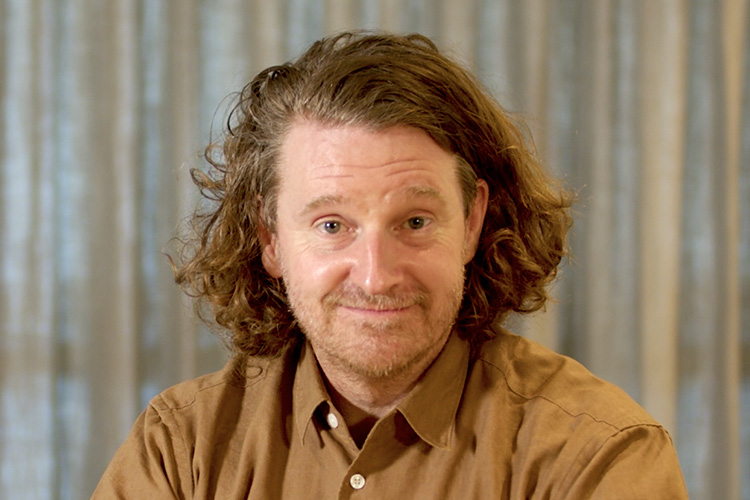
Andrew Mackinnon
Host
Andrew tells stories that uncover what drives people, how they plan, make decisions and shape life after work.
His background in journalism and communications brings complex topics like super and retirement to life in clear, relatable ways.
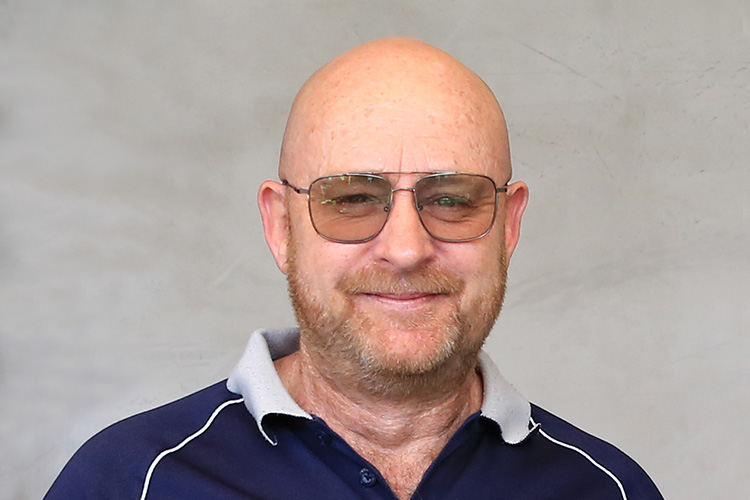
Phil Milne
Cbus Coordinator, WA
Phil makes sense of super by breaking down complex information into simple, practical terms.
With a background as a crane driver, rigger and scaffolder, he understands the industry firsthand and knows what matters on site. He’s committed to giving members clarity and support when they need it most.
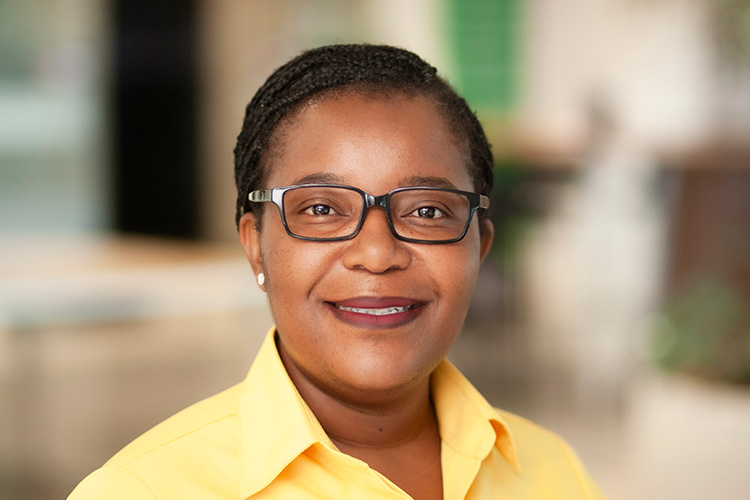
Jesca Nyakuromba
Team Leader, Retirement Advice Consultants
Jes specialises in retirement planning and is known for making complex financial concepts easy to understand.
With more than 10 years’ experience in financial advice and almost five years at Cbus, she’s dedicated to helping members feel confident and informed as they plan for retirement.