

Shaping your retirement with the Age Pension
11 March 2026 | 20-minute listen
The retirement you can afford isn’t just about how much super you have, but rather:
- How well you understand the system
- When you can act
- How you can shape your retirement using super and the Age Pension to inform your planning decisions


Read the transcript
Introduction
Jeff: [00:00:01] When couples go along and get assessed for the Age Pension, even if one of that couple is under Age Pension age, they will still be assessed as a couple. So their combined income and assets. But in the case where someone is under 67, then any money they have in their accumulation super is not counted in their combined means testing under the assets and income test.
Andrew: [00:00:30] Everyone's circumstances are different, so shaping your retirement needs to be flexible as well. It's worth digging a bit deeper then to clarify some of the trickier concepts like what exactly is the Age Pension? When's the best time to apply for it and what are your support options if you need to retire before you turn 67? So keep listening to shift the way you think about your super from CBUS. I'm Andrew McKinnon and this is the CBUS Super Shift podcast. Back again for the Super Shift journey is Jeff Wallen's, CBUS Senior Education Specialist with 25 years of super experience under his belt. Jeff welcome back.
Jeff: [00:01:20] Thanks a lot. Great to be on board.
Andrew: [00:01:21] And Tracie Wilson, who's been a coordinator at CBUS for over a decade. Tracie, thanks so much for joining us as well.
Tracie: [00:01:28] Thanks, Andrew. It's great to be here.
Andrew: [00:01:31] Now, just before we dive in, I want to remind listeners that the information in this podcast is general in nature and may not account for your specific needs. Please consider your financial position, objectives, and requirements before making financial decisions. Please read the relevant product disclosure statement and target market determination on our website to decide if CBUS is right for you. We'd also like to remind listeners that past performance is not a reliable indicator of future performance. Okay, let's get into it. The Age Pension was introduced in 1909 for men and 1910 for women, but most Australians didn't live long enough to receive it back then. Male life expectancy was just 55 years of age, but their Age Pension eligibility kicked in ten years later at 65. Female life expectancy was about 58, while their Age Pension eligibility was 60 years old. This meant that a sizeable portion of the population didn't even reach pension age, and so the scheme likely benefited very few people.
What is the Age Pension?
Jeff: [00:02:46] Historically, it has been seen as a bit of a reward, I suppose, for paying taxes for all your working life and then sitting back and retiring using that income. And so now with life expectancies being well beyond 67, statistically its purpose has changed. It is essentially a safety net for people who need that income support in retirement and who meet income and asset test eligibility. The issue there is that some people might think they're not eligible, maybe because of the assets in the income test, they might assume that they're not eligible. So it's important that people do check their eligibility even from age 67. And the asset and income test thresholds, they do change each year. And people may lose track of what the thresholds are and they might become eligible without realizing it. Now there's all sorts of facets to the eligibility rules, and there are exceptions for various groups of people. So it's important that people check the rules and how they apply to their own circumstances.
Andrew: [00:03:49] Tracie, what response do you get when you talk to members about the Age Pension?
Tracie: [00:03:53] You know, I'm not going to get that. That's the common sort of consensus out there. It's not going to be for me. And they get very confused with obviously the super and the pension because they believe that both of them are 67. So they are obviously quite shocked when they find out they can actually access their super. And I try and encourage them to attend one of our retirement seminars or the online seminars because they're fabulous.
Andrew: [00:04:19] Tracie's right. A CBUS retirement webinar or seminar is an excellent way to get a clear overview of not just the Age Pension, but also superannuation and how the two work together to support you in retirement.
Jeff: [00:04:32] Okay, so they can work very well together. And the introduction of Super Guarantee back over 30 years ago, you could argue that super was designed to take pressure off the Age Pension. And the government does talk about both super and the Age Pension being a couple of really important pillars of our retirement system in terms of income in retirement. So like any other assets, certainly financial assets that can reduce someone's eligibility for the Age Pension or possibly knock them out for being eligible for the aged pension, depending on how they sit against the assets test, it is quite feasible for someone to be receiving income from their super income stream, for example, but to be also receiving Age Pension income. So the two can work side by side.
The Age Pension for couples
Andrew: [00:05:20] Let's talk about relationships and how the system works for couples. If, for example, you've turned 67, but your partner hasn't.
Jeff: [00:05:28] Sure. So and that's really important when couples go along and get assessed for the Age Pension, even if one of that couple is under Age Pension age, they will still be assessed as a couple. So their combined income and assets. But in the case where someone is under 67, then any money they have in their accumulation super is not counted in their combined means testing under the assets and income test. Whereas if that younger spouse in that couple has money in an income stream in super that is counted, people should get it checked out according to their circumstances. There could be an opportunity to use a younger spouse's super account to improve the older spouse's Age Pension eligibility, which of course could benefit both in that situation.
Andrew: [00:06:25] To get a sense of what people know about the Age Pension and how it really fits into retirement planning, we asked some members.
Wally59: [00:06:33] No, I wouldn't know that.
Layla24: [00:06:34] Not really.
John Doe2: [00:06:36] Yeah, I did do one of those calculators, and it gave me an idea of how much my super would last. It sort of scared me a little bit.
David62: [00:06:44] Yeah, I've done the online calculations and used to calculate it for all that, and it's going to be in my 90s and I can't see what. I'm not being pessimistic. I don't know if I'll last that long, but yeah, I think I should be okay.
John Doe2: [00:06:56] I think if I can get the Age Pension when I retire, it'll just add to the amount that I have with my super. Because once I get my super, I got to buy that car that I wanted.
Andrew: [00:07:11] Okay, so the Age Pension is something that we need to talk more about so that people understand the benefits, the purpose and how it can work with super. Tracie. When should people start thinking seriously about the Age Pension and what does the process look like?
When to get ready to claim the Age Pension
Tracie: [00:07:26] Yeah, we generally sort of as a rule, we say four months before turning 67, get all your supporting documents ready and ready to submit anything to Centrelink. Or we actually say 13 weeks before turning 67. Submit your Age Pension claim.
Jeff: [00:07:39] Between ages 60 and 65 is a good time to start to really understand how the Age Pension works. Some people would set out to never be dependent on the Age Pension. Other people would expect to qualify at some point. But Centrelink itself recommends submitting your application 13 weeks before turning 67, so getting your documents ready. And if you delay your application, they won't backpay to when you're 67, for example, they'll only back pay to when you've put in your application.
Andrew: [00:08:13] Right. And again, it comes down to trying to be as organised as possible as early as possible, because why leave this money on the table if you don't have to?
Jeff: [00:08:22] Yes, for sure. And Centrelink itself even recommends that people get in touch with them a good 13 weeks before age 67 or 13 weeks before they think they would become eligible to apply. And what I've picked up is that a lot of people don't realise that if you're in part of a couple, you could combine have as much as $1 million in assets and still qualify for a part pension. I think a lot of people assume that those thresholds are just simply lower. So you could still have, as a couple, quite a lot in super and, or in your total financial assets, and still qualify for a part pension. And considering that for a couple, the maximum Age Pension is up to $46,000 per year, and that that could be income that you'd be missing out on.
Are you eligible for the Age Pension?
Andrew: [00:09:08] We've talked a lot about Age Pension eligibility. So how is it calculated and what does Centrelink actually consider when assessing you? Well, a number of things. Two in particular are the income test and the assets test.
Jeff: [00:09:23] So your super is included in both the income and the assets test. The assets test combines the value of all of your assets. And importantly, it excludes the value of your home. So if you think of the value of everything in your home, in your garage, and for people living on land, some land around your home is excluded from the assets test. But if you're on a large property for a farm or a hobby farm. Then some land on your farm, for example, might be considered an asset. Certainly, if it has the ability to produce income and then your financial assets and all of those are combined into a single asset figure. So what I've described already is the assets test under the income test. Then any explicit income you're earning through employment or through, for example, rental property where there's regular documented income or maybe an overseas pension, UK or KiwiSaver pension, those explicit forms of income, they are considered in the income test. But any financial assets you have that are paying income to you, such as dividends from shares or maybe income from your super, that actually income is not counted. So what Centrelink uses is deeming rules where those financial assets are deemed to be paying income based on fairly low deeming rates. And under both tests, there's a lower threshold. So if your assets and your income are below that threshold, then you'd qualify for the full pension. If your assets and income are between the lower threshold and the upper threshold, then you'd qualify for a part pension. And if you're over the upper threshold, then no pension. And that's both tests. And you'd need to essentially pass both of those tests.
Andrew: [00:11:09] You mentioned deeming rates. Can you explain what they are.
Jeff: [00:11:13] Deeming is essentially Centrelink's way of assuming a level of income off the back of the total value of your financial assets. So of course, things like your sofa, your television, your paintings, your jet ski in the garage, these things are not assumed to be producing income because they're not financial assets. They're just things that you possess. But they are counted in the assets test. Under the income test, your financial assets, term deposits, cash in the bank, shares, any money that you have in super, whether it's an income stream or an accumulation account, these are assumed by Centrelink to be producing income using deeming rates. And they're fairly low rates. And they're low because some financial assets are producing income, such as maybe your shares that might be paying dividends or your income stream account from your super. But some assets are not paying income, such as your accumulation account within super, or you might have cash in the bank, that sort of thing. That's not paying income, but Centrelink doesn't break down all of your financial assets and treat them separately. It simply gets a total value of your financial assets. And then based on that value, using deeming rates, which people can find on the the Services Australia website assumes that those assets are paying out income to you. And that's what's counted along with any explicit income in the income test.
Retiring early and other government benefits
Andrew: [00:12:42] Now, there are also circumstances where people choose or need to retire early. There are provisions for this that illustrate just how super and the Age Pension can help support you.
Jeff: [00:12:53] I think this is probably a good time, just to remind everyone that there is a big difference between being able to access super and the earliest time we can access all of our super. And certainly with a fund like CBUS, we see many people either deciding to or being forced to retire earlier than they had expected. They might have been injured and we support industries that are high risk, and we see members retiring earlier than they'd expected. They might be caring for someone else, or they've had job changes, found it difficult to go back into the workforce.
Tracie: [00:13:27] Yeah, definitely. Um, it's very hard on the body with some of the skills that they have and the jobs that they do.
Jeff: [00:13:34] I think it's really important to check not only eligibility for the Age Pension down the track, but whether you might be eligible for something shorter term, such as JobSeeker or disability support pensions, and even look at other ways to maybe boost your super in those few years before looking at moving on to the Age Pension.
How can you access your super?
Andrew: [00:13:56] Okay, so when your super funds become available, how do you actually access them? Well, one way is to make a withdrawal from your existing super account. If you're looking to receive regular payments, a better option might be to set up a fully retired SIS or super income stream within your super fund so you can receive income payments into your bank account, which make additional withdrawals easier. There are also some excellent tax benefits that come with this option.
Jeff: [00:14:25] Quite simply, it's a steady income paid out to your bank account from your superannuation account. Now it's a separate account from your accumulation account. So if you've retired and from the age of 65 onwards, even if you're still working, maybe part time, an income stream can supplement that income. Some of the benefits are they're tax free. So the income that's paid out to you is tax free. And the investment earnings are also tax free, unlike the investment earnings within accumulation accounts. And importantly, an income stream is still invested. And our members get to choose from a whole menu of investment options and how they invest it, whether it's low risk, high risk, you know, volatile, low volatile, shares, property, cash, fixed interest, so a whole range of investment options. The one condition that is applied to income streams is that you must draw down, or the super fund must pay out to you at least a minimum level of income. And that starts at 4% of the balance from the age of 60, if that's when you start it.
Does a super income stream affect your Age Pension?
Andrew: [00:15:26] So ultimately, how does a super income stream impact your Age Pension?
Jeff: [00:15:31] Well, the important thing for people to understand here is that an income stream from super is not treated any differently to an accumulation account. So in fact, the income that you're receiving from a super income stream doesn't have an effect on your age pension eligibility, because your super income stream account is already being deemed to be producing income.
Andrew: [00:15:59] The idea that you're continuing to grow your super even in retirement is helpful too, but it's perhaps a different outlook on risk that we have at this stage.
Super and risk
Jeff: [00:16:07] A lot of people do move into retirement thinking, right, I've got to be ultra low risk now, but I think our in this country, we need to rethink what risk means to us. And certainly in super, risk is greatly diminished by the incredible level of diversification that members can benefit from within their super. And that diversification from an investment point of view reduces risk and gives us access to growth. Certainly over the medium to long term. And there are some really nifty strategies available to achieve consistency of income in an income stream from super and some growth at the same time. And it's important to get advice, of course. It's around being able to get someone who can understand your circumstances and really tailor these strategies. And it could produce many thousands of dollars of, of benefits in the long term.
Common mistakes with the Age Pension
Andrew: [00:17:01] What's the biggest mistake you see people make when trying to combine super and the Age Pension?
Jeff: [00:17:08] One of the big mistakes is not understanding how the assets and income tests work. And as we talked about earlier, the assumption that maybe you wouldn't qualify when in fact you might. So I think leading up to age 67, maybe 13 weeks prior, even before that, get in touch with Centrelink and begin to understand how the assets and income tests can apply to your circumstances. So I think and reading in the financial press and the commentary in general, and certainly in meeting with our members, one key mistake I see is people delaying setting up an income stream with their super, because they think that's going to affect their Age Pension, when in fact, as we've mentioned, an income stream is treated the same way as an accumulation account. The actual income that's paid out isn't counted. The balance of the income stream is deemed to be producing income.
Andrew: [00:17:59] So timing the application, you know, it can cost members or anyone money.
Jeff: [00:18:05] Absolutely. And some research I've read has shown that nearly a third of people who qualify for the Age Pension delay applying for the Age Pension by up to 12 months, and that could be thousands of dollars of income support you're just simply missing out on. And Centrelink doesn't back pay. So if you miss out on that income, you'd never get that income.
Where to go for more information
Andrew: [00:18:29] Now, we might not have covered every single detail in this episode, but there's a bunch of things you can do to find out more and take control of your super. Attend Jeff Wallen's fantastic Age Pension seminar or webinar. He has a way of making it interesting and actually fun. There are also sessions covering broader retirement planning and income streams. Just head to the CBUS website, search for education sessions and select that or any session that suits you. You could hop online and use one of our calculators, in particular the Age Pension calculator, to get an estimate on how much Age Pension you're likely to receive and when you can apply for it. There's also the Age Pension fact sheet, which covers a lot of the information we've discussed. And you can also listen to more of the CBUS Super Shift podcast, which covers a range of topics to help you make the most of your super now. And of course, there's the website cbussuper.com.au for more details on everything you've heard in this episode. There's also the CBUS advice team you can contact on 1303 361784. Reach out to the on-site Coordinators or even walk into the CBUS front counters located in each state, and you'll find staff ready to help. All of this information can also be found in the show notes of this episode. Well, that's it for this episode. Tracie, thanks so much for being on the podcast. It's been good to have you.
Tracie: [00:20:04] Oh, thank you for having me. It's been great.
Andrew: [00:20:06] And Jeff, as always, breaking it down so even I can understand it. Thank you so much.
Jeff: [00:20:10] Thanks for having me.
Andrew: [00:20:14] You've been listening to the CBUS Super Shift podcast. Listen to more episodes at cbussuper.com.au/podcast or follow at Apple Podcasts, Spotify, or wherever you listen to podcasts.
What you'll take from this episode
- A brief history of the Age Pension: we’ve come a long way since 1909 when only men received it
- Retirement is more than leaving work: it’s shaping the lifestyle you can afford
- Timing is everything: knowing when to apply for the Age Pension could set you ahead in retirement
- Super and the Age Pension: taking pressure off the system and working together for your lifestyle
- Better together: how assets and income are assessed if you’re in a couple
Related resources
Explore tools and resources that help you grow your super and plan for what’s ahead.
Meet your host and guests

Andrew Mackinnon
Host
Andrew tells stories that uncover what drives people, how they plan, make decisions and shape life after work.
His background in journalism and communications brings complex topics like super and retirement to life in clear, relatable ways.
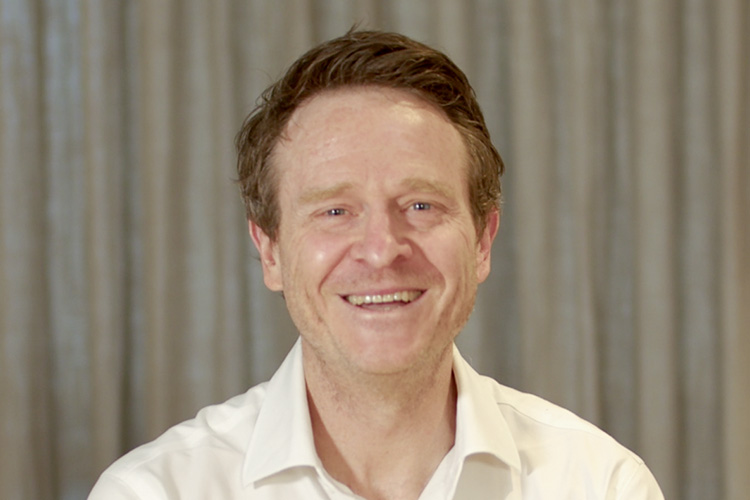
Jeff Wallens
Senior Education Specialist, CBUS
Jeff believes education is at the heart of getting the most out of super and retirement.
He has over 25 years’ experience in super. At CBUS, he delivers webinars and seminars on retirement planning.

Tracie Wilson
CBUS Coordinator, QLD
Tracie brings 10 years of experience to CBUS in Queensland.
Specialising in member education, union engagement and helping younger members best understand super, she’s passionate about empowering members to plan early.