

Planning for what you leave behind
6 May 2026 | 20-minute listen
Planning for what happens to your super after you die can seem scary. This episode takes the pressure off the process by talking through:
- Being clear on your wishes
- The importance of nominating binding beneficiaries
- CBUS is working to make beneficiary nominations clearer and simpler


Read the transcript
Introduction
[00:00:00] Andrew: Before we get into it, a quick heads up. In this episode, we talk about some changes Cbus is working on to make binding death benefit nominations clearer and easier for members to manage.
These changes aren't in place yet, so there's nothing you need to do right now. When things are ready, we'll let you know what's changing and what it means for you.
For now, this conversation is about why beneficiary nominations matter and how planning ahead can make things a lot easier for the people you care about.
[00:00:32] Ash: We want to make it crystal clear to ourselves and to our members on where we should be paying their death benefits, and we also want to make it easier for their families or their beneficiaries to receive those benefits as easily and as fast as possible.
Who gets your super when you die?
[00:00:51] Andrew: Where does your super go when you die? To the people you love or stipulate in your will, right? Well, maybe not because estate planning or the nominating of your beneficiaries needs to be done in a very specific way with your super fund. And yet, more than a third of Australians with super haven't told their fund who should receive their super when they die.
So, in this episode, we're talking about what happens if you don't nominate beneficiaries correctly. So, keep listening to shift the way you think about your super.
I'm Andrew McKinnon, and this is the CBUS Super Shift podcast. Once again, I've nominated Tim Jovic to join me for this chat. Tim's a long time CBUS coordinator with 30 years on the tools as a plumber. Tim, thanks for joining me on the podcast today.
[00:01:48] Tim: Thank you very much for having me.
[00:01:50] Andrew: I've also nominated Ash Cattanach to join us for her perspective. Ash is a CBUS senior manager of advice operations and a certified financial planner. Ash, thanks for being here.
[00:02:00] Ash: Thanks, Andrew. Great to be here.
[00:02:02] Andrew: Now, just before we dive in, I want to remind listeners that the information in this podcast is general in nature and may not account for your specific needs. Please consider your financial position, objectives, and requirements before making financial decisions. Please read the relevant product disclosure statement and target market determination on our website to decide if CBUS is right for you. We'd also like to remind listeners that past performance is not a reliable indicator of future performance. Okay, let's get into it. Estate planning is the general term for making decisions and planning for who will get your assets, super, insurance and other worldly goods in the event that you die. Ultimately, estate planning affects more than just money. It protects your wishes, your loved ones, and your legacy. So why do so many people put it off or not do it at all.
[00:03:03] Ash: They think that it's not going to happen to them, or it's not going to happen to them imminently. It's a tomorrow problem. So, they don't feel like they need to address it today. The other thing is it's not nice to think about death or something happening to you that might stop you from making decisions. Then when someone might finally set aside some time to think about these things or complete the paperwork, then they might start to feel a bit overwhelmed or confused.
[00:03:32] Tim: I think it can seem complicated. There's a lot of jargon, and it can seem like a fair bit of effort, but it can be a lot simpler than they probably realise.
[00:03:48] Andrew: Nominating beneficiaries within your superannuation has historically been quite a challenging process. However, CBUS is working towards a series of changes designed to lighten the load for members and make nominations and death benefit payments much easier. But before we get to that, there are some key documents you must have ready at whatever phase of life you're in.
Planning to make it easier for your loved ones
[00:04:10] Ash: Documents such as wills and power of attorneys are important no matter what age you are. If you die without some of these documents in place, it's going to be really stressful for the people that are left behind. Your parents, family members, or whoever you want to actually get your super and assets. So, what you should have in place, first and foremost is making sure that you've got a beneficiary nomination in place. A beneficiary nomination is you deciding who will get your superannuation and insurance if you've got it, if you were to die. The other key document to have is a will in which you outline who is likely to get your assets. Again, if something was to happen to you and you die. Then there's the power of attorney documents, which are also very important, and help give you peace of mind if you lose financial or mental capacity to make financial decisions. So those are the key documents and things that everyone should have in place.
[00:05:08] Andrew: Tim, from the members you speak to, is there a general understanding around powers of attorney and estate planning?
[00:05:15] Tim: Well, some would have a rough idea, but that's obviously what we try and do is educate and enlighten them. Power of attorney gives you the choice to choose someone who you trust to make decisions that are in line with your wishes, with your superannuation. I mean, I have seen coordinators at bedside tables of hospitals where the members not looking too well, and they're trying to get decisions and make decisions by having that power of attorney in place. You can be rest assured that the person you've chosen will make decisions that are your wishes.
Types of powers of attorney
[00:05:47] Ash: I just touched as well that there are two types of powers of attorney. So, there's one which can cover you if you're unable to make financial decisions. And that can also come in handy if you're going overseas for something and you need someone in Australia to make some financial decisions on bank accounts and what have you. And there's also medical powers of attorney. So, someone who can make your medical decisions in the event that you're also unable to make them for yourself. There are two types and you don't have to nominate both. You can do one or the other, and you would choose someone or multiple people to be able to do those things for you in those events.
[00:06:31] Andrew: Since the will alone doesn't cover everything. Nominating a beneficiary for your superannuation becomes incredibly important.
What are beneficiaries?
[00:06:38] Vito: Do you know what the word beneficiary means?
[00:06:41] John Doe3: Um. I didn't know what the word beneficiary means. I still don't really know what the word means. Um, I just think of it as something the person you leave your money to if something was to go wrong.
[00:06:50] Linda 58: Yes, it's me nominating where my retirement will go. So, I've got my husband and I've got a daughter. So, if I've actually sort of, um, I'll say it 50/50. So, when I pass away, it's going to roll over to them.
[00:07:06] Jackie 26: I kind of know a little bit. I know that's like, who gets your super if you die, but I don't really know how it works or who it goes to.
[00:07:14] David 62: The beneficiary is the person I nominate that's going to be entitled to my, uh, for in this case, my super, if I pass away or something happens to me. Mhm.
[00:07:23] Darren 35: Uh, so it's that sort of like who will inherit my payout and stuff like that. Is that yeah. Yeah.
[00:07:30] John Doe2: What's the beneficiary? I'm not really sure about that either. It seems complicated.
[00:07:37] Andrew: While some people are clear on what a beneficiary is, many aren't. And while having a will is important, it's just as critical to set up beneficiaries with your super fund. So, what's the difference between a will and beneficiary nominations?
Planning is important, no matter how big or small your estate is
[00:07:52] Ash: So, like I mentioned earlier, within superannuation you have the option to nominate a beneficiary. That's who will get your superannuation balance and any insurance proceeds that you might have when you die. Now it gets a little bit technical, but superannuation is not classified as what we call an estate asset. So, what that means is that if you've got a binding death benefit nomination, and it's to a person who is able to receive the nomination, then it will get paid directly to them. Your estate is made up of the assets that pass under your will when you die. This usually includes things such as bank accounts, cars, and your share of any property that you own solely in your name. Property that you own as joint assets with someone else typically passes automatically to the surviving owner and therefore doesn't usually form part of your will.
[00:08:43] Andrew: If someone doesn't have a big estate, is this still something they need to think about?
[00:08:48] Tim: Well, absolutely. I mean, the process is the same upon someone's passing. If you've got $200,000 or $1 million in there.
[00:08:55] Ash: And I would just say it's not for anybody, it's for everybody, because it doesn't matter how much or how little you think that you have. It's really about trying to ease that stress and that pressure from the people that you've left behind. And a lot of our members have death cover. So, your super account balance, which you may not think is very high, but you've got an insurance benefit.
[00:09:18] Andrew: And age doesn't matter.
[00:09:20] Ash: No, no. So, I mean, I think, and Tim, you probably have seen it where we deal with some of our members parents in really sad situations. You know, death doesn't discriminate. No. And I think that's really one of the hardest things is he doesn't discriminate. And we all think particularly when we're young, it's not going to happen to us. It's not me. I'm Superman, if you like. And unfortunately, we see it firsthand. It does.
[00:09:49] Tim: Well, exactly. And so, the end of the day, the death is one thing that can be it's obviously traumatic for any family to go through. I see it firsthand, regularly, too often, and it's not a very nice part of the job.
[00:10:01] Ash: And I would agree with that, especially if you have been the key financial person in a relationship or a family. It's about making it easier for the person that you've left behind as well.
[00:10:16] Andrew: To make the death claim process easier and ensure payments are distributed in a way members would reasonably expect. How and to whom does your super get paid? This is particularly relevant if, like more than a third of super account holders in Australia, you have no death benefit nomination at all. Ash, can you take us through the changes that CBUS has made and how they could alleviate some of the bigger stresses around beneficiaries and payouts?
What happens if you haven't set up beneficiaries?
[00:10:45] Ash: So, in the event that a member dies and they don't have a death benefit nomination, and scarily, a lot of them don't, CBUS have implemented a framework now for who will be paid that benefit. So, if there's no nomination now, it will get paid out to a current surviving spouse. And then if there's no spouse, it will go to a child or children in equal proportions. And if there's no children, then it will get paid out to the estate or legal personal representative. So no longer is the fund having to try and make decisions around who it gets paid to. And because we've introduced this framework, we can try and get the death benefits out to those people as quickly as possible.
[00:11:28] Tim: Yeah. It eliminates the lengthy claim staking process at times, which can really, really drag on. And we've also doubled our insurance team to try and resolve these claims a lot quicker because again, the fund has to follow process. So, you know, not having things in order can really drag things out. So that's just some of the things the fund is trying to do to make things a bit easier for families.
[00:11:49] Andrew: Look, that seems to be a terrific change, circumventing what is otherwise a very long, drawn out process and adding a lot more certainty. When it comes to binding nominations. Ash, who can and can't be nominated?
[00:12:03] Ash: So, for a binding nomination, it needs to be a superannuation dependent to be a valid nomination. That could be your spouse or a child of any age, someone who's financially dependent on you or someone that you're in an interdependency relationship with. As long as the nominations are current and the proportions equal 100%. Or you can also nominate your legal personal representative. So as long as those criteria are met, then they would be deemed as a valid beneficiary nomination.
[00:12:36] Andrew: That's a great breakdown and something to keep in mind. If you want your super to go to someone who is a non-financial dependent, like a parent, sibling, or close friend, you can't nominate them directly through your super. What you can do instead is nominate your legal personal representative. That's the person who manages your estate, usually the executor of your will. From there, your super can be distributed in line with what you've set out in your will. If you're thinking about doing that. Check the details on the CBUS website or get in touch with us. So, you have to be on top of it, really, don't you, Ash?
[00:13:10] Ash: Yeah, we want to make it crystal clear to ourselves and to our members on where we should be paying their death benefits. We want to make it easier for their families or their beneficiaries to receive those benefits as easily and as fast as possible. So, all members can have a binding death benefit nomination. And we're also making it easier for members to actually do that. So, at the moment, you can only do it manually through a paper-based form. You also need to get two witnesses to sign it, and you need to review and renew it every three years. The changes that we're putting in place are going to make it a lot easier. No longer does it have to be a paper-based form, and our members can do it online. It doesn't need to be witnessed. We're also making it non lapsing so it won't expire. You won't have to make sure that you've got the reminder in your phone or your calendar every three years to review and renew it.
Reviewing and changing beneficiaries
[00:14:04] Tim: And it's easier for the member to change their beneficiaries if they wanted to at any point.
[00:14:08] Ash: Absolutely. It does mean, though, that our members will need to make sure that they do think about updating their nomination when their personal circumstances change.
[00:14:17] Andrew: And of course, CBUS will still remind members to keep their binding nominations up to date.
[00:14:22] Tim: Absolutely. Yeah.
[00:14:23] Ash: So, if you get married or separate, you have a child or if someone you've nominated passes away, it's really important that you make a new binding nomination. For your nominations to be valid when you die, those relationships still need to be current, and the proportion of your death benefit that you've allocated still need to make sense. For example, if you nominate your partner and your two kids each to get a third of your benefit and then your partner dies, that actually makes your nomination invalid because that third that they were going to get can no longer be distributed.
[00:14:55] Andrew: It'll be another logical change for CBUS to make. It's common sense really, at the end of the day. And great news for members.
[00:15:01] Ash: Yes, Andrew. Our members and their families have enough to worry about. So, we want to make superannuation and the death benefit process as easy and as straightforward as possible.
[00:15:10] Tim: Crystal clear. Still got to take kids to sport. Pay the bills, do the shopping, do the cleaning, all that sort of stuff. Put the food on the table. I mean, the bills keep coming when you're dead for whoever you leave behind. So, if you can have this in place, well, it's certainly going to take a lot of pressure off people.
[00:15:28] Andrew: Estate planning really does take planning. There's also some common mistakes to avoid when going through the process.
[00:15:35] Ash: Number one would be putting it off. The other common mistake is not updating documents and plans. It is important that once you've got these things in place, making sure that you do review them regularly or at any major life change, and thinking that a will is enough. Right? We quite often forget about super and insurance. We need to also be thinking about including that as part of your estate plan and powers of attorneys, and then also not telling anyone. So, it's all well and good to have these plans in place, but you also need to let somebody know where those documents are kept, because that's really that's the first thing that they will need whenever they want to start kicking in the estate planning process. So when they want to start talking to banks or super funds, they will need to know where a copy of your will is and a copy of any other important documents, as well as if there's anything outside of the will or any special things that you want to convey in the event that you were to die.
Keep your personal details up to date
[00:16:38] Tim: And I would throw in updating documents, make sure your details are correct with CBUS. I'm talking about letters getting posted out, making sure your address is right, your emails right, and read a letter if it comes to you, open it up. If the funds notifying you of something, then have a look at what it is and ask someone to support their with the fund. If you want any clarity about what exactly is being communicated to you.
[00:17:02] Ash: Yeah, that's a really good one because you don't want to be starting the process on the back foot of already having to try and arrange to update information before you can submit.
[00:17:21] Andrew: When it comes to death and the high emotions that go along with it, the last thing anyone wants to manage is piles of paperwork. Making it as easy for your loved ones as possible and knowing that your super will go to the people you choose brings its own peace of mind. Now, we might not have covered every single detail in this episode, but there's a bunch of things you can do to find out more and take control of your super. As we've discussed, you can make a beneficiary nomination on the Nominate a Beneficiary page on the CBUS website, cbussuper.com.au. And while you're on the website, you can search for education sessions and book a retirement planning seminar or webinar. You can check out our calculators to see how much super you might have when you retire, and how much income that could provide. The calculators can also give you an estimate on how much Age Pension you're likely to receive, and when you can apply for it. You can also listen to more of the CBUS Super Shift podcast, which covers a range of topics to help you make the most of your super. And finally, there's the CBUS Advice team you can contact on 1300 361 784, where you'll find stellar support. Reach out to the on-site coordinators like Tim or even walk into the CBUS front counters located in each state, and you'll find staff ready to help. And links to all this information can be found in the show notes of this episode. Tim, thanks so much for coming along and tackling this topic. It's been great.
[00:19:12] Tim: Well, thanks for having me, Andrew. Fantastic. And goodbye to all our members out there.
[00:19:16] Andrew: And Ash, thank you for helping explain it all. You've made estate planning and its implications much easier to understand.
[00:19:23] Ash: Thanks, Andrew. It has been fun. Thanks, Tim.
[00:19:26] Tim: Thanks, Ash.
[00:19:27] Andrew: Again, if you're thinking about making a binding death benefit nomination, you can get in touch or download the form from our website. And as I mentioned earlier, CBUS will let you know when these new processes are ready and what it means for you. You've been listening to the CBUS Super Shift podcast. Listen to more episodes at cbussuper.com.au/podcast or follow at Apple Podcasts, Spotify, or wherever you listen to podcasts.
What you'll take from this episode
- Have a will: make sure your wishes are clear and legally documented
- Nominate your super beneficiary: decide who gets your super when you’re gone
- Review your beneficiaries: keep your nominations up to date so they’re right for you
- Set up a Power of Attorney: appoint someone to make decisions if you can’t
- Get organised: planning early helps your family when it matters most
Related resources
Explore tools and resources that help you grow your super and plan for what’s ahead.
Meet your host and guests
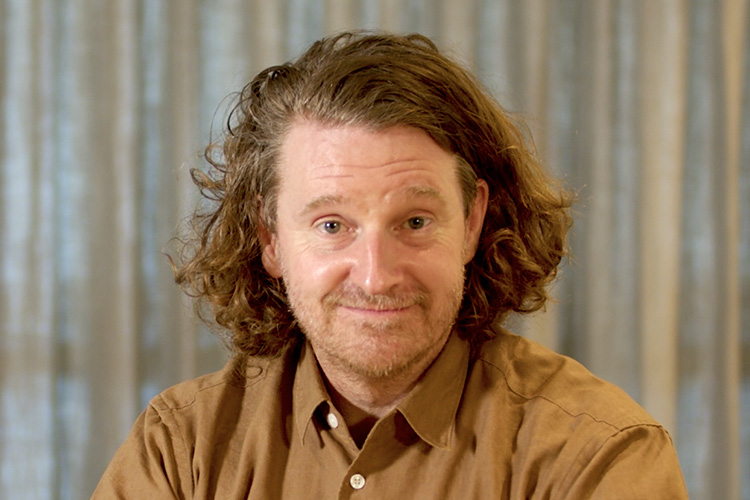
Andrew Mackinnon
Host
Andrew tells stories that uncover what drives people, how they plan, make decisions and shape life after work.
His background in journalism and communications brings complex topics like super and retirement to life in clear, relatable ways.

Tim Jovic
CBUS Coordinator, VIC
Tim has spent more than 30 years in the construction industry, starting out as a plumber.
Today, he’s a CBUS Coordinator working with members across Melbourne, sharing his experience in a clear, down-to-earth way.
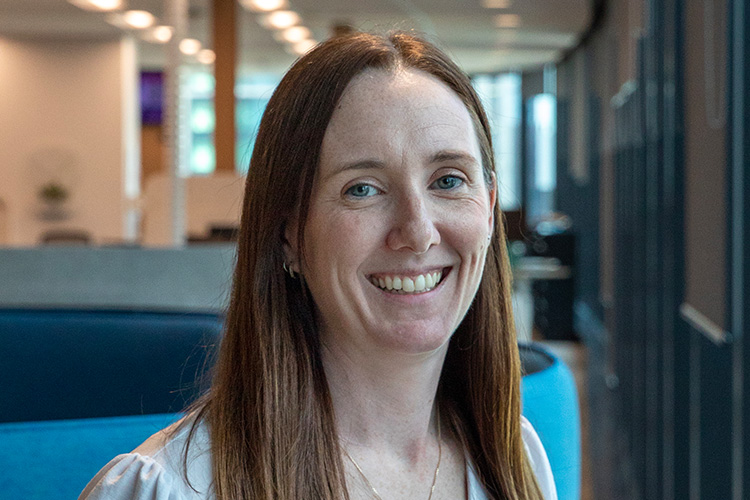
Ashleigh Cattanach
Financial Planner, VIC
Ashleigh is a CBUS Senior Manager of Advice Operations and a Certified Financial Planner.
She leads the ‘behind-the-scenes' teams, making sure everything runs as it should, so members receive clear, practical support when needed.